ATTACHMENT
William Farr
GoLab, Milano
6th - 23rd November 2025
“È un incontro fisico, diretto, che traduce in materia la tensione tra presenza e sensazione, tra forma e vibrazione. E quel «Mi maltrattano più di quanto io le possieda» è una confessione, ma anche una dichiarazione di poetica. L’opera lo sovrasta, lo attraversa, lo costringe a un confronto costante con sé stesso. La pittura diventa un campo di forze, un evento più che un oggetto: tremante, pulsante, vivo.”
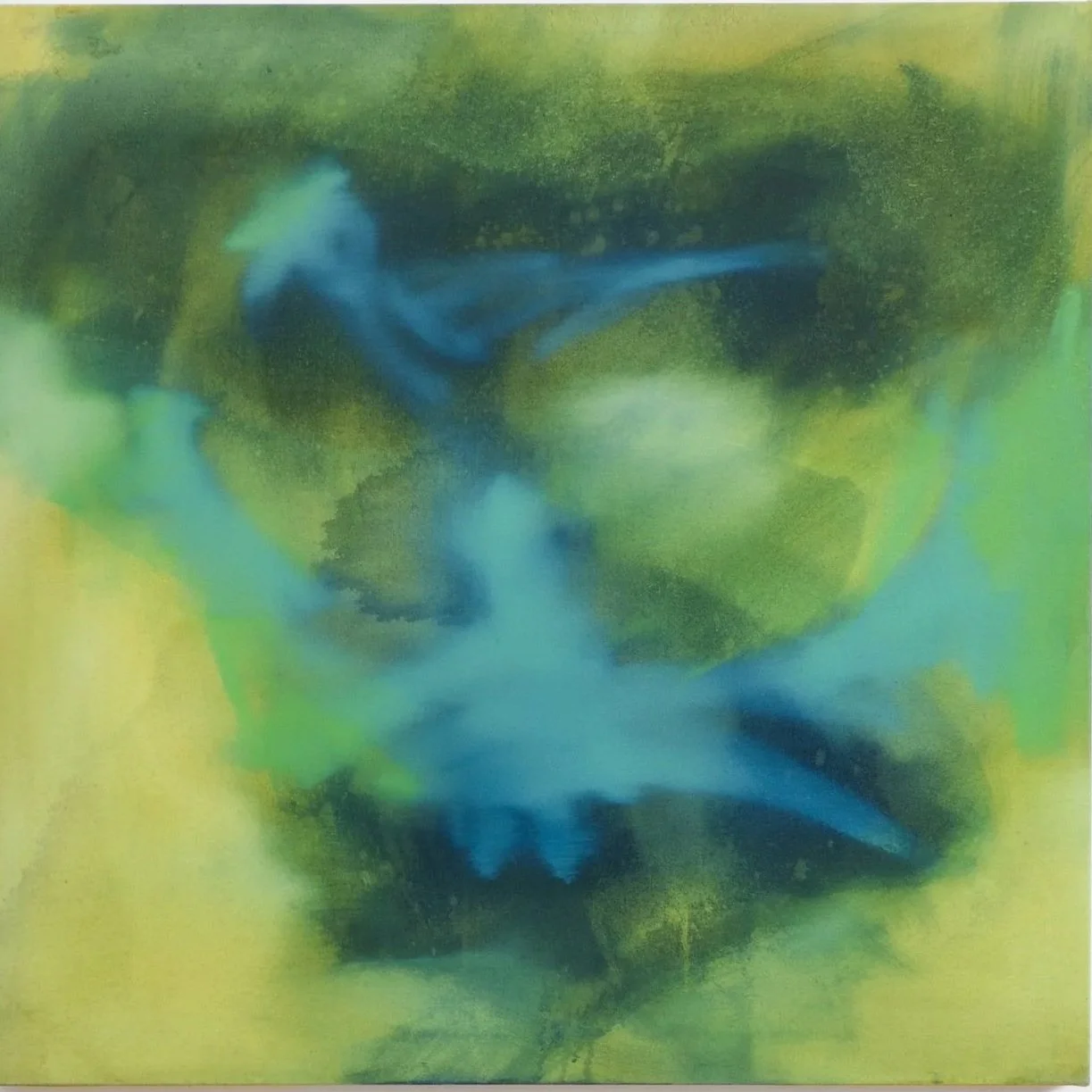
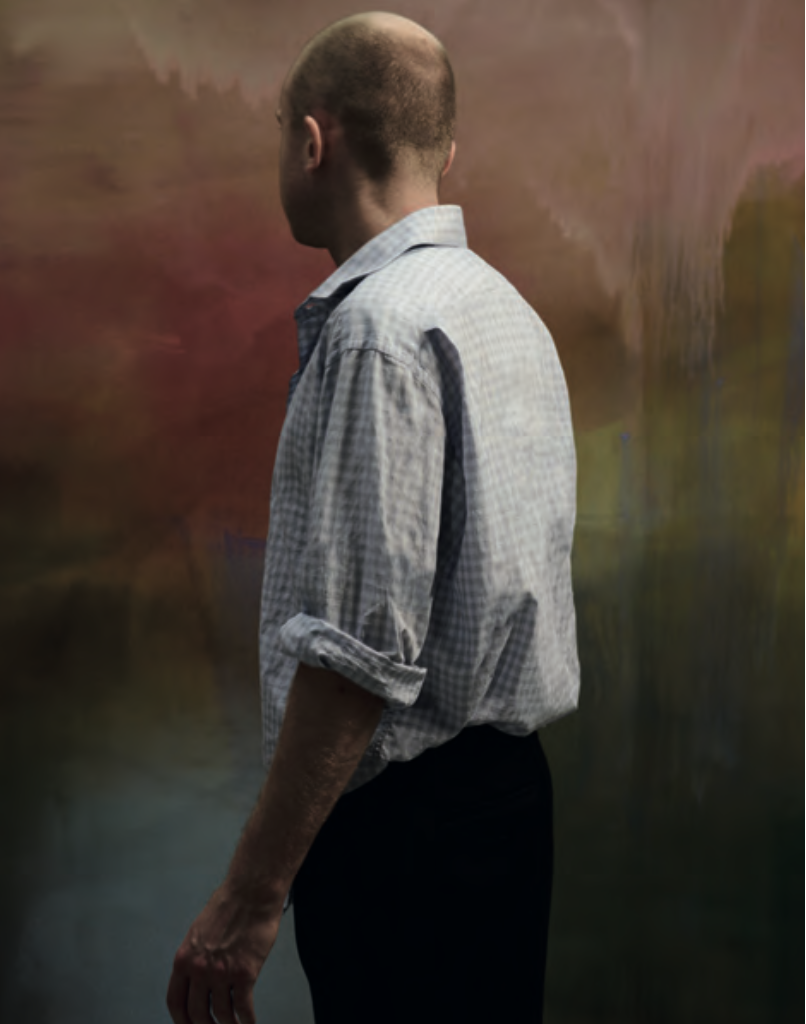
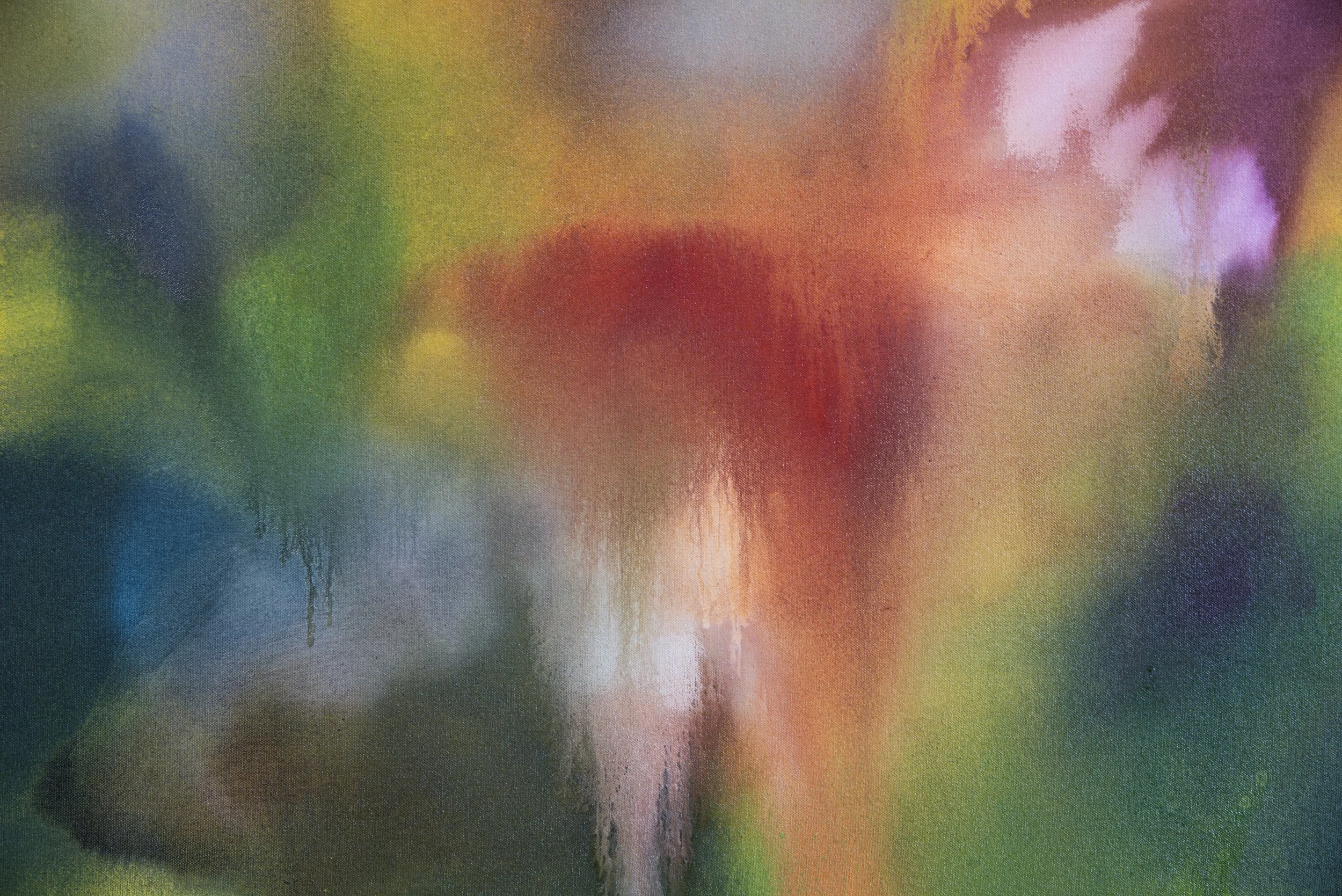
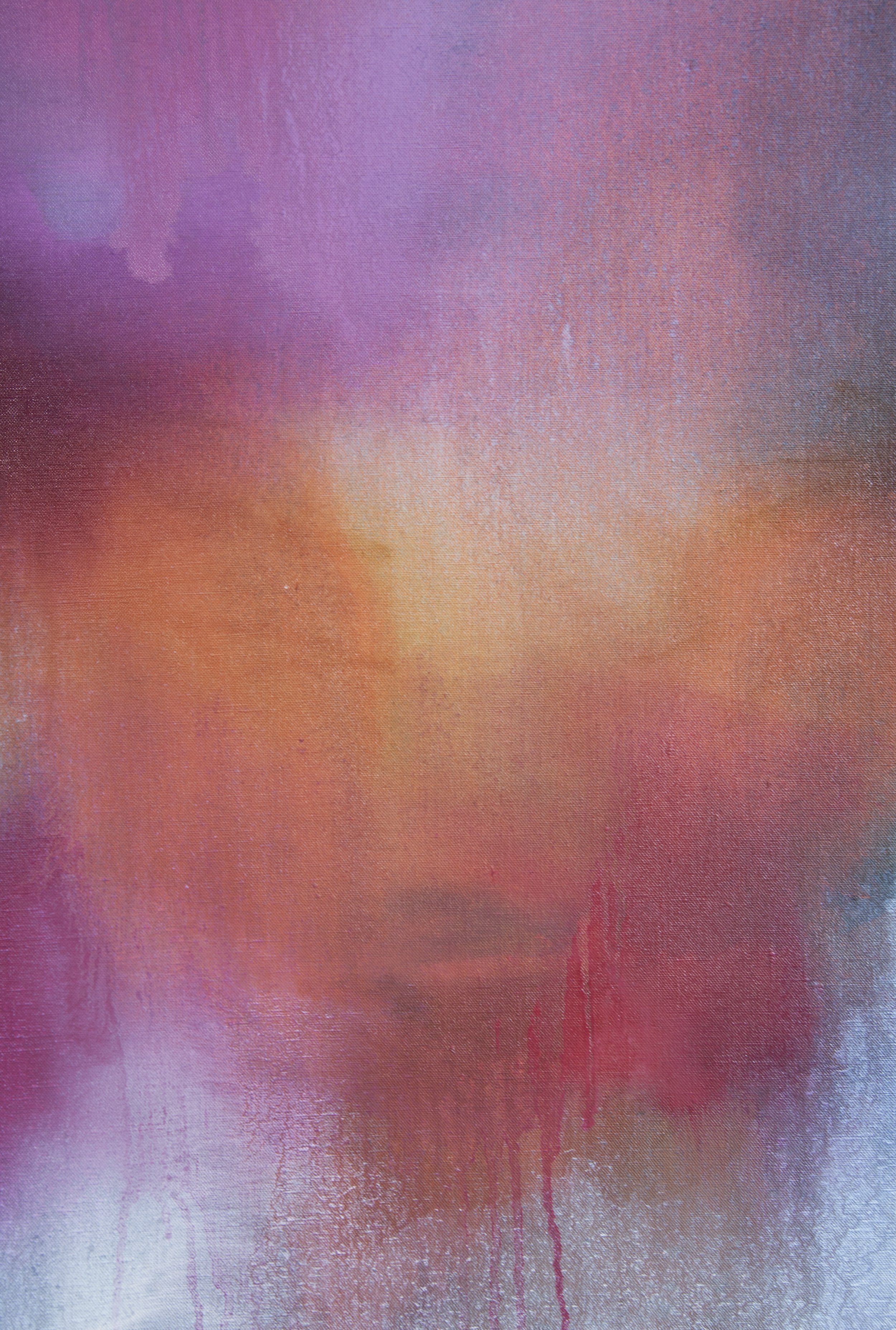
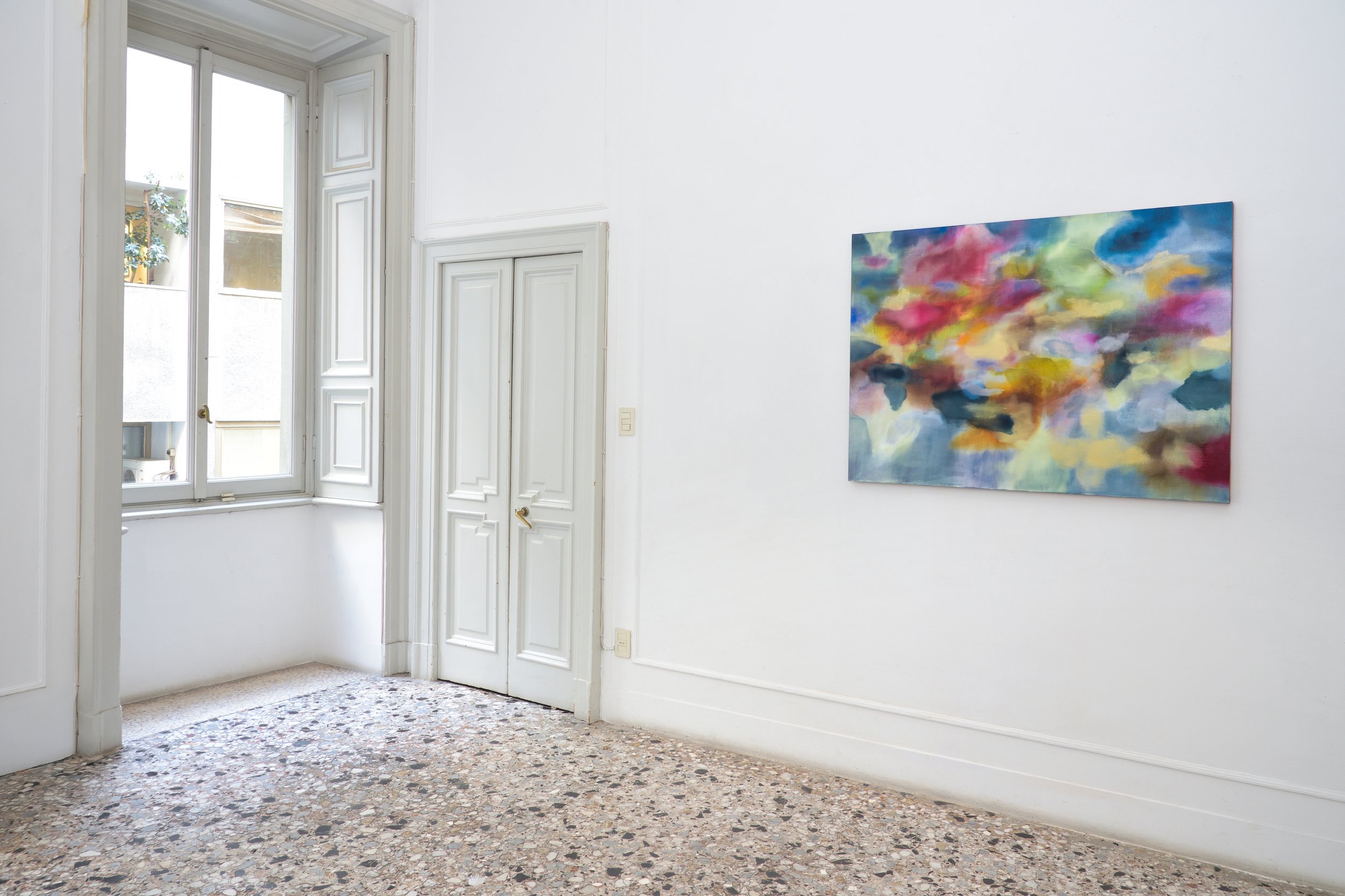
In William Farr’s studio, each painting possesses a will of its own. Now, three large canvases lean, not hung, or attached, but held. Propped on metal stands built by his father, angled but separate, they stand within the space, looming, almost floating, a concept brought forth from his previous exhibitions. Some of the canvases vibrate. Not metaphorically but literally. Speakers are mounted to their backs, emitting sub-audible frequencies. You don’t hear them, but you feel them. A low hum in the sternum and slight tremble of each toe. William says, “They bully me more than I own them.” Farr’s work navigates the tension between material presence and embodied sensation, subtly questioning the continued value of painting’s physical form. The paintings are not objects so much as events. Trembling, sweating, shifting, throbbing.
In the interim between his last exhibition and this one, Farr undertook a period of intensive stillness: involving many hours of seated silence, without writing, technology, or distraction. What surfaced in that quiet was not clarity, but confrontation – with pain, with grief, with the persistent illusion of self. Whiplash, emotional entrapment, and anguish shifted. Through sustained attention to sensation, without narrative, without escape, he found something like relief, but more crucially, recognition. A psychosomatic healing. “I learned to love the pain,” he says. “To watch it evaporate. The subtle changes, the adapting nature of it.”
He asks: why make objects at all? Why offer permanence in a world that teaches us to let go? And yet, he paints. The contradiction holds. Pain becomes a quality of experience rather. Pleasure, the inevitable contrast. Awareness folds them both in. In this space, painting is not an answer, but a trace of inquiry resulting in a fragile artifact of presence, made despite everything.
The making of a body of work becomes a process of confronting the ego as it rebuilds itself, even as the act of creation demands its undoing, precisely because of the ego’s desire to produce something meaningful. He speaks of psychic death, sobriety, and the tension between self-regard and creative necessity. Above it all is revealed a ritual and chaos, transcendence and collapse. Painting means compulsion, not comfort.
The introduction of white - a colour he previously avoided - now emerges as a pivotal shift in Farr’s confrontation of pain and fear. White emerges as an aesthetic and ephemeral threshold, where the act of capturing time coexists with the impulse to let it go. Farr speaks of mixing whites and primers to achieve fluctuating transparency, resisting flatness. The overlapping pigments allow the white to be a site of movement, depth and space. This complexity mirrors his own process of letting go. White becomes a space of union and euphoric liberation balancing the electricity of his colour field canvases.
Attachment threads through the work, pulsating. It speaks to the literal fastening of the piece to the space, the artist, and the viewer. A tethering. In Italian, there is no single word for “attachment”; instead, there is a constellation of meanings. Allegato refers to a digital attachment, accessorio to a physical one, innesto and giunto to mechanical connections, vincolo to legal or binding constraints, and attaccamento to emotional or psychological bonds. Farr’s work exists within this multiplicity. Anchored yet expansive, technical yet tender.
The paintings are part of William Farr as much as he is a part of them.“At a subatomic level” he says, “we share the space of the studio – grouping together shifting parts, taking on each other’s.” He is part of the crowd, among the paintings in the studio. He talks of the movement in that relationship. In the process, skin and hair shed. Bits of himself are pulled out of them. “They are never whole. Atrophy within the making.” They demand presence, even when he wants to let go, evoking the love and burden and craving and aversion of Attachment.
William Farr
William Farr